





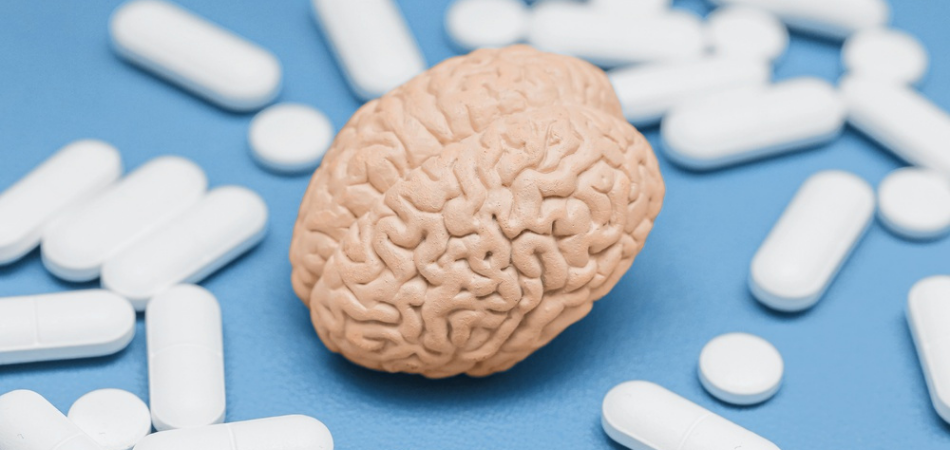
If you’ve ever wondered why cravings hit so hard, why a thought becomes an urge and then feels like a physical pull, you’re not alone.
A craving can strike like a lightning bolt or as silently as a ghost. But cravings aren’t random. They’re the result of deeply ingrained brain behaviours designed for survival, now redirected toward substances that cause harm.
We’re breaking down what cravings truly are, why they feel so overwhelming and how you can take back your power, one step at a time.
What exactly is a craving?
Behavioural researchers define a drug craving as the “desire for the previously experienced effects of a psychoactive substance.” A drug craving feels like an intrusive thought or force; a message from the brain compelling you to escape some form of discomfort by taking a substance.
The brain can almost inextricably tie any substance to feelings like rapid comfort, pleasure or escape. If the connection is given enough time, the brain learns to anticipate and drive the body to return to a drug. A loop is created where the brain seeks the drug long before conscious thought catches up.
This is why cravings can often feel irrational or bewildering. What we must all be careful of, however, is not to look at our cravings as a sign of weakness or a lack of willpower. Cravings are a neurobiological response from the brain, built through repetition, emotional learning, stress, or deeply embedded habit pathways.
Understanding cravings in this context is the first step towards loosening their power.
The neuroscience of addiction
In our younger years, we may feel as though alcohol and drugs have relatively temporary effects. Yet as we get older, or as addiction lasts longer, they can change the way the brain learns, motivates, remembers and responds to stress.
Below are the key mechanisms that drive cravings and why they can feel so overwhelming:
Dopamine rewards and the “anticipation” loop
Cravings don’t start when you take a substance. They begin long before that, in the moments when your brain starts to anticipate what is coming. Dopamine in the brain, the neurotransmitter tied to reward and motivation, fires most intensely not when you take a drug, but when your brain predicts the reward. Over time, the brain learns that certain cues mean a substance is coming. A powerful loop is created from external drivers:
Cue appears – dopamine spikes – urge rises – behaviour follows
In this loop, the brain becomes wired to chase the relief it expects, even when the substance isn’t actually bringing any pleasure. The “dopamine anticipation loop” goes some way to explaining why cravings are so hard to resist. The brain chases a reward before you’re even aware the urge has formed.
Why cravings feel physical, not just psychological
Cravings often feel like they take over the whole body, and there’s a reason for that. When the brain expects a substance, it sends signals through the nervous system that prepare the body for what usually comes next. Over time, these reactions become automatic.
A craving can therefore show up as:
- A surge of tension in your muscles
- A knot or twisting feeling in the stomach
- A rush of heat through the body
- Restless legs and an urgent need to move
- A spike in heart rate or shallow breathing
These signs reflect the body’s conditioned response to previous substance use. Understanding the mind-body connection is key. Once you recognise that cravings can be physical signals, you can begin to manage them better.
Triggers hardwiring in the brain
Over time, the brain starts linking certain cues with substance use. These cues are often named by addiction specialists as “People, places and things,” and they can be the drivers of some of the most difficult-to-resist urges.
People, places and things can be as broad and varied as a place, a person, a feeling, a time of the day, furniture in the house, or even a song that played when you took a drug before. Once the brain forms these links, it treats the trigger as a signal that the substance is “expected.” Triggers could include:
- Environmental cues: Walking past a pub or a certain street can activate brain pathways linked to past use.
- Emotional triggers: Emotions like stress, loneliness, boredom or conflict can activate old reward circuits and make a craving feel urgent.
- Social triggers: Friends you took drugs with, gatherings like festivals or even group chats might act as a powerful driver.
- Internal sensations: Sensations like fatigue or physical discomfort might mimic sensations you once soothed with drug or alcohol use.

How can I better manage my cravings?
Using these steps, try to remember that your goal isn’t to “force” your way out of an urge, but to interrupt the patterns that keep them going.
Here are techniques to use for regaining control during a craving:
Delay – distract – decide
One of the simplest but most effective craving-management tools is the delay–distract–decide method.
- Delay: Pause for a few minutes before doing anything. Cravings peak quickly and often fade just as fast.
- Distract: Do something brief that shifts your focus. Make a drink, step outside, message someone, move your body.
- Decide: Once the intensity drops, choose your next step with a clearer mind instead of reacting on impulse.
Urge surfing
Among professional therapists, a technique called urge surfing is often taught to help manage one’s own unwanted behaviours. You are encouraged to recognise how cravings feel like waves, rising sharply, breaking, then falling away.
Focus on observing the increasing surge of the craving. Where does it sit in your body? How does it change? What emotions come with it? With practice, you may find solace and confidence in recognising how temporary cravings can be, and knowing you can ride them out.
Changing internal “scripts”
Cravings are often strengthened by the quiet and automatic stories your mind repeats:
“I can’t cope without it,” “Just once won’t hurt,” “I deserve this,” or “I’ll quit tomorrow.”
These internal scripts can feel convincing in the moment, but they are learned patterns, not genuine truths.
Changing them begins with catching the script and then replacing it with something more self-affirming, such as:
- “This craving will pass, I’ve ridden them out before.”
- “Taking this won’t solve what I’m feeling right now.”
- “Relief is temporary, but the setback lasts.”
- “I can choose something that actually supports my recovery.”
Making efforts to rewrite your internal message can weaken the automatic pull of cravings. Much like a muscle of the body, the brain can learn to respond to cravings with resistance, so you can choose a healthier response.
Where can I get help for cravings and addiction?
If you often find yourself battling urges you can’t explain, needing “just one more” or feeling drained by the constant loop of craving and relief, please remember, you don’t have to face this alone.
At UKAT, we offer specialist treatment for behavioural addictions and their underlying emotional triggers. Our rehab treatment programmes combine expert therapy, neuroscience-informed care and compassionate support designed to help break the hold of addiction, not just on the surface but deep inside.
If you’re ready to take the next step, we’re here, right now. Reach out to Recovery Lighthouse today, because one conversation could be the moment that marks the beginning of your new life.
(Click here to see works cited)
- “Why Change People, Places, and Things in Early Recovery?” Psychology Today, Sussex Publishers, www.psychologytoday.com/us/blog/understanding-addiction/202106/why-change-people-places-and-things-in-early-recovery
- Getselfhelp, www.getselfhelp.co.uk/docs/3Ds.pdf
- Jeremy Sutton, Ph.D. “Urge Surfing: How Riding the Wave Breaks Bad Habits.” PositivePsychology.Com, 9 Oct. 2025, positivepsychology.com/urge-surfing/.