






What is compulsive overeating?
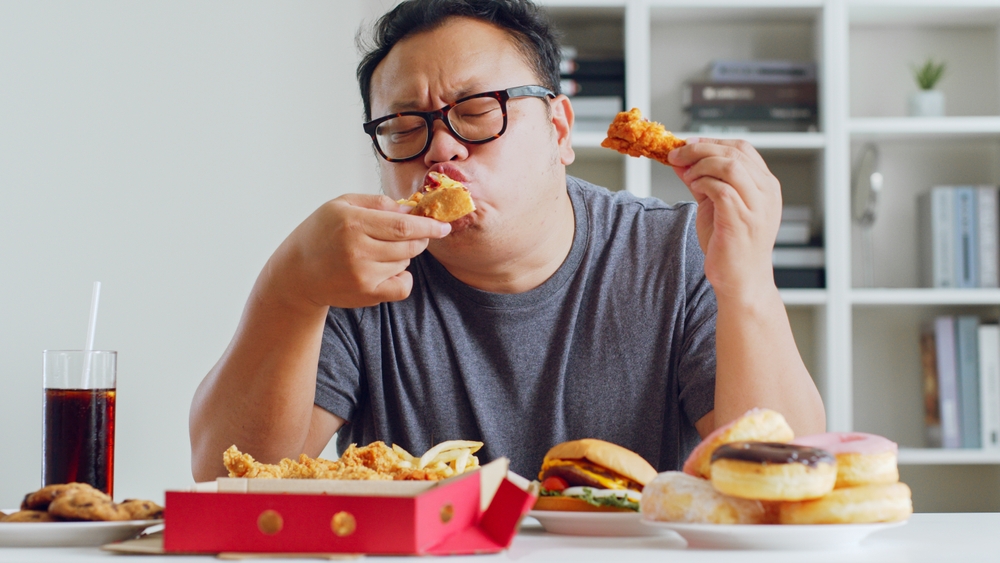
Compulsive overeating is a pattern of repeatedly eating beyond the point of fullness, with a feeling that you can’t stop or control what’s happening. It might look like continuing to eat long after a meal should have ended or turning to food automatically when you’re stressed or upset.
It’s worth noting that compulsive overeating and binge eating disorder are related but not identical. Binge eating disorder is a clinically recognised condition involving distinct episodes of eating large amounts in a short period, accompanied by distress and a sense of loss of control.
Compulsive overeating is broader and may not follow the same structured pattern, but it can be equally disruptive to your life.
The important thing to know, whichever description fits your experience, is that what you’re going through has explanations behind it, and those explanations point toward things that can genuinely help.
What causes compulsive overeating?
One of the most common assumptions about compulsive overeating is that it comes down to a lack of discipline. The research tells a different story.
A review of over four decades of research into emotional eating found that the normal biological response to acute stress is actually a loss of appetite, not an increase.
When someone consistently eats more during periods of stress or low mood, that pattern has been learned rather than driven by genuine hunger. It usually develops early in life, particularly in environments where emotional needs were responded to with food rather than comfort.
Once established, the behaviour is reinforced because high-calorie foods produce a short-term mood boost. Your brain registers the temporary relief and stores the connection between feeling bad and eating and between eating and feeling briefly better. That response becomes automatic, which is why it can feel impossible to interrupt through willpower alone.
Compulsive overeating is a coping mechanism that your brain has learned to rely on and understanding that changes how you approach the problem. It points you toward addressing the emotional driver rather than punishing yourself for the behaviour.
How eating restrictions make overeating worse
If the emotional connection is the trigger, restrictive dieting is what keeps the pattern going. This is the part that catches many people off guard, because the instinct after overeating is usually to restrict what you eat next.
Research on dietary restraint has consistently found that people who diet strictly are more likely to overeat than people who don’t.² In other studies, people who were actively restricting their food intake ate more after being given a small indulgence, not less. The researchers describe this as a “what-the-hell effect,” where once the diet feels broken, the sense of control collapses entirely.
Strict dieting can directly cause the loss of control that it’s supposed to prevent, which is uncomfortable to hear but important to understand. NICE guidance on eating disorders reflects this by advising people in treatment for binge eating not to attempt weight loss during the therapeutic process, because restriction is likely to trigger further episodes.³
How compulsive overeating affects your life
The physical consequences of persistent overeating build gradually and can include weight gain and digestive discomfort. But for many people, it’s the psychological toll that feels most immediate.
The pattern is familiar to most people who experience it. You eat compulsively, feel guilty or ashamed afterwards, and then the guilt itself becomes the emotional state that triggers the next episode.
The NHS notes that binge eating is frequently carried out alone and followed by feelings of disgust, which drives secrecy and can put strain on close relationships.
Your self-esteem takes a cumulative hit when you repeatedly do something you told yourself you wouldn’t, because the internal narrative starts to turn against you. You may start to see yourself as someone without self-control, which makes it harder to believe that change is possible. That belief is worth challenging, because the research consistently shows that compulsive overeating responds well to the right kind of support.
Practical steps you can take to address compulsive overeating
Before we focus on the professional side of support, there are certain steps that you can take yourself. Not only will this help you understand certain aspects of your overeating, but it may also enable you to use the information you learn with a qualified therapist.
This sounds simple, but it directly addresses the hunger-driven loss of control that follows skipped meals or long gaps without food. When your body isn’t running on empty, the urge to overeat loses some of its power.
This is the hardest part of the process, and it’s where professional support can make a real difference.

Professional support should also be considered
Trying to manage compulsive overeating on your own and finding that the pattern keeps returning is a common experience, and it usually means the behaviour needs more structured support than self-help alone can provide.
NICE recommends a stepped approach for binge eating disorder.³ The first step is usually a guided self-help programme based on cognitive behavioural principles, supported by brief sessions with a trained professional. If that isn’t sufficient, group or individual CBT focused specifically on eating disorders is the next recommendation.
CBT works by helping you identify the thought patterns and emotional triggers that drive your eating and developing practical alternatives. It has a strong evidence base for binge eating, with around half of people who complete treatment achieving full abstinence from bingeing.
Professional assessment also provides an opportunity to screen for binge eating disorder specifically. A confirmed diagnosis gives you a clearer understanding of what you’re dealing with and access to a treatment pathway that has been designed around the condition.
How Recovery Lighthouse can help
Compulsive overeating that has started to affect your daily life deserves proper support, and Recovery Lighthouse is here to provide it. We offer compassionate, personalised treatment for eating disorders, with therapeutic support designed to address both the emotional drivers and the behavioural patterns behind compulsive eating.
Contact Recovery Lighthouse today for a confidential conversation about your situation and what support might look like for you.
(Click here to see works cited)
- van Strien, T. (2018). Causes of Emotional Eating and Matched Treatment of Obesity. Current Diabetes Reports, 18(6). https://doi.org/10.1007/s11892-018-1000-x
- Polivy, J., & Herman, C. P. (2020). Overeating in Restrained and Unrestrained Eaters. Frontiers in Nutrition, 7. https://doi.org/10.3389/fnut.2020.00030
- National Institute for Health and Care Excellence. (2020, December 16). Recommendations | Eating disorders: recognition and treatment | Guidance | NICE. Nice.org.uk; NICE. https://www.nice.org.uk/guidance/ng69/chapter/Recommendations
- NHS. (2021, February 12). Overview – binge eating disorder. Nhs.uk; NHS. https://www.nhs.uk/mental-health/conditions/binge-eating/overview/
- Aston University. (2025, July). Parents should encourage structure and independence around food to support children’s healthy eating. Medicalxpress.com; Medical Xpress. https://medicalxpress.com/news/2025-07-parents-independence-food-children-healthy.html
- Grilo, C. M., & Juarascio, A. S. (2023). Binge-Eating Disorder Interventions: Review, Current Status, and Implications. Current Obesity Reports, 12(3), 406–416. https://doi.org/10.1007/s13679-023-00517-0