





Crack Cocaine Addiction | Signs, Symptoms and Effects
In the UK, crack cocaine is a Class A drug, carrying severe penalties for possession or supply, but despite these laws in place, the drug has still been able to devastate both the users and communities around them.
What is crack cocaine?
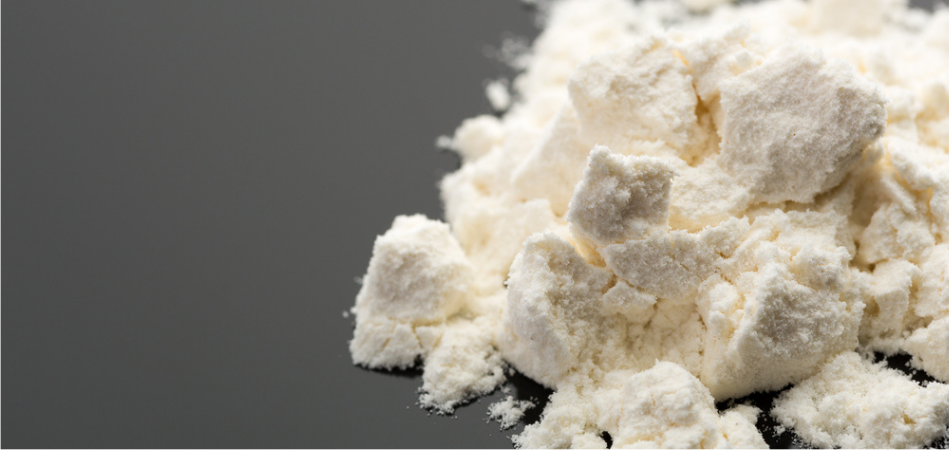
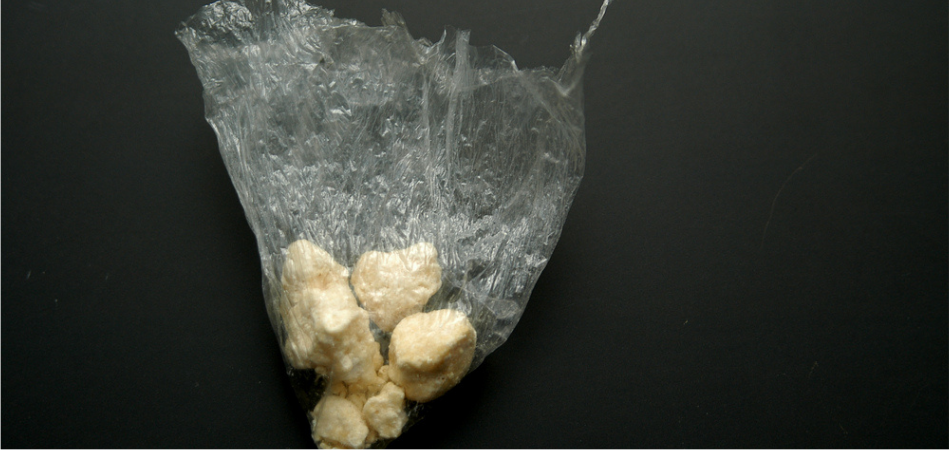
Crack cocaine is the same drug as the powdered form of cocaine most people recognise but it takes on a new form when ‘cooked’. Here, dealers will mix the cocaine with water and baking soda, heating it until it solidifies into small, rock-like chunks. These “rocks” will make a cracking sound when they are heated, which is where the origin of the name crack cocaine comes from.
This change in form might seem minor, but it completely transforms the drug’s effects. Now, when smoked, the vapour can reach the lungs and bloodstream within seconds, causing an intense rush that hits far faster than powdered cocaine.
What makes crack cocaine so addictive?
Crack cocaine is one of the most addictive drugs available on the market and there’s a good reason to why. It overwhelms the brain’s reward system by blocking dopamine reabsorption, meaning the neurotransmitter builds up rapidly and sends powerful signals of pleasure and reinforcement. In crack cocaine, the faster the dopamine surge, the stronger the brain’s association between the drug and reward and few substances act as fast as smoked crack.
What makes it even more destructive is how brief the high lasts, typically lasting around 15-30 minutes. Once the rush fades, a sharp crash follows, marked by anxiety and intense cravings to use again. This “high–crash–repeat” cycle can take hold within a short time, leaving people caught between the euphoria of use and the misery of cocaine withdrawal.
Psychologically, crack addiction thrives on this chase. The temporary euphoria and alertness it brings can mask deep feelings of hopelessness or low self-worth, and the need to re-experience those few minutes of control becomes hard to resist. Eventually, the brain adapts to ‘need’ crack and with that comes devastating changes to a person’s entire life.
Crack cocaine use in the UK
Crack cocaine use in the UK has steadily risen over the past decade. In 2023–24, more than 10,000 adults in England were in treatment for crack cocaine alone, accounting for around 3% of all people in structured treatment.
In the year ending March 2024, police across England and Wales seized just over 40 kilograms of crack cocaine. Most seizures came from local forces rather than border agencies, suggesting that crack is largely produced and traded within the UK rather than imported in bulk.
The most troubling and heartbreaking trend, however, is seen in death statistics. The Office for National Statistics recorded 1,118 cocaine-related deaths in 2023, representing a 30% rise from the year before and the highest annual total on record. This reflects a growing pattern of people struggling with stimulant addiction and its impact spreading far beyond the drug scene.
While statistics can feel detached from reality, they reflect real people facing the harshest consequences of crack cocaine addiction. The next section explores how that addiction can affect everyday life before it’s too late to reverse the damage.
Struggling with crack cocaine addiction?
Help is one call away.
What are the signs of crack cocaine addiction?
Recognising the signs of crack cocaine addiction early can make the difference between intervention and collapse. Because the drug’s effects are so fast-acting, the shift from experimentation to dependence can happen before someone realises what’s happening.
Below, we explore the physical, psychological and behavioural signs of crack cocaine addiction:
- Rapid weight loss or a thin, unhealthy appearance
- Dilated pupils that stay large even in dim lighting
- Burn marks on fingers or lips from hot pipes
- Persistent coughing or breathing problems
- Nosebleeds or nasal irritation from combined powder use
- Exhaustion followed by bursts of restless energy
- Powerful cravings that dominate daily thought
- Intense mood swings, from euphoria to anxiety or despair
- Heightened paranoia or mistrust of others
- Difficulty sleeping, eating or relaxing
- Loss of motivation or inability to focus on goals
- Neglecting work, studies or family responsibilities
- Isolating from friends who don’t use
- Selling belongings or stealing to fund use
- Staying awake for long binges followed by crashes
- Hiding drug paraphernalia such as small pipes, foil or glass tubes
If you’ve noticed any of these signs in yourself or someone you care about, it may be time to stop and take stock. The next section offers a few simple questions to help you understand where you stand with crack cocaine and whether it’s time to reach out for help.
Am I addicted to crack cocaine?
Crack cocaine addiction can blur your sense of control, and what once felt like a choice can quietly become a compulsion. Asking yourself the following questions can help bring clarity:
- Do you crave crack or think about it throughout the day?
- Have you missed work, school or family time because of using or recovering from it?
- Are you spending money meant for essentials on crack?
- Have your relationships suffered because of your use or behaviour while high?
- Do you promise to stop, but end up using again soon after?
- Are you finding it hard to enjoy anything unless you’re using?

If any of these questions feel uncomfortably familiar, it may be a sign that crack has begun to take control. Recognising this early gives you a much better chance of breaking free through professional and structured crack cocaine addiction treatment programmes.
Not sure if you are suffering from crack dependency?
In less than five minutes, our confidential self-assessment can help you better understand your relationship with crack and whether further support may be needed.
Where can I get help for crack cocaine addiction?
If crack cocaine is starting to take over, help is available. At Recovery Lighthouse rehab centre, we’ve helped thousands of people step away from addiction and rebuild their lives through structured treatment that addresses both physical dependence and psychological triggers.
Recovery often begins with a drug detox, giving your body the chance to clear itself of the drug in a safe, supportive setting. After detox is completed,, therapy helps uncover what led to use in the first place, while developing new coping tools to stay steady once treatment ends.Once your initial stay in crack cocaine rehab is complete, you will have the option of secondary treatment care, for as long as you feel necessary to strengthen your recovery. Aftercare continues that guidance through relapse prevention planning and peer support networks.
Crack cocaine can make life feel chaotic and out of reach but recovery is entirely possible. Taking that first step may feel intimidating, yet it’s the most important one you’ll ever make. Reach out to Recovery Lighthouse today and find out how our rehab treatment can help you or someone you care about reclaim stability and freedom from crack cocaine addiction.
Struggling with crack addiction? We're here to help.
Our team will guide you through every treatment option for your crack dependency with honesty and care, supporting you at your own pace with no pressure or obligation at any stage.
📞
Call UsFree & confidential
✉
Email UsWe reply within hours
📋
AssessmentTakes 5 minutes
🔒 All enquiries strictly confidential
Frequently asked questions
(Click here to see works cited)
- Verma, Vivek. “Classic Studies on the Interaction of Cocaine and the Dopamine Transporter.” Clinical Psychopharmacology and Neuroscience, vol. 13, no. 3, Dec. 2015, pp. 227–38, https://doi.org/10.9758/cpn.2015.13.3.227
- Santos-Longhurst, Adrienne. “How Long Does a Cocaine High Last? What to Expect.” Healthline, 31 Mar. 2020, www.healthline.com/health/how-long-does-cocaine-high-last
- Foltin, R. W., and M. W. Fischman. “Residual Effects of Repeated Cocaine Smoking in Humans.” Drug and Alcohol Dependence, vol. 47, no. 2, Aug. 1997, pp. 117–24, https://doi.org/10.1016/s0376-8716(97)00093-8 Accessed 22 July 2020.
- Office for Health Improvement & Disparities. “Adult Substance Misuse Treatment Statistics 2023 to 2024: Report.” GOV.UK, 28 Nov. 2024, www.gov.uk/government/statistics/substance-misuse-treatment-for-adults-statistics-2023-to-2024/adult-substance-misuse-treatment-statistics-2023-to-2024-report
- Home Office. “Seizures of Drugs in England and Wales, Financial Year Ending 2024.” GOV.UK, 16 Jan. 2025, www.gov.uk/government/statistics/seizures-of-drugs-in-england-and-wales-financial-year-ending-2024/seizures-of-drugs-in-england-and-wales-financial-year-ending-2024
- Health, Population. “Deaths Related to Drug Poisoning in England and Wales.” Ons.gov.uk, Office for National Statistics, 22 Oct. 2024, www.ons.gov.uk/peoplepopulationandcommunity/birthsdeathsandmarriages/deaths/bulletins/deathsrelatedtodrugpoisoninginenglandandwales/2023registrations