





If you’ve ever been prescribed antibiotics, you’re likely familiar with the standard warning to avoid alcohol while taking them. This is because certain types of antibiotics can cause unpleasant reactions, even with a small amount of alcohol.
But some have no chemical clash at all, leading many to assume that a glass of wine with dinner is fine. Nitrofurantoin sits in a confusing middle ground, and this is where mistakes are made.
This help guide explains everything you need to know about nitrofurantoin, and alcohol and what to do when cutting back during a short course feels harder than it should.
What is Nitrofurantoin?
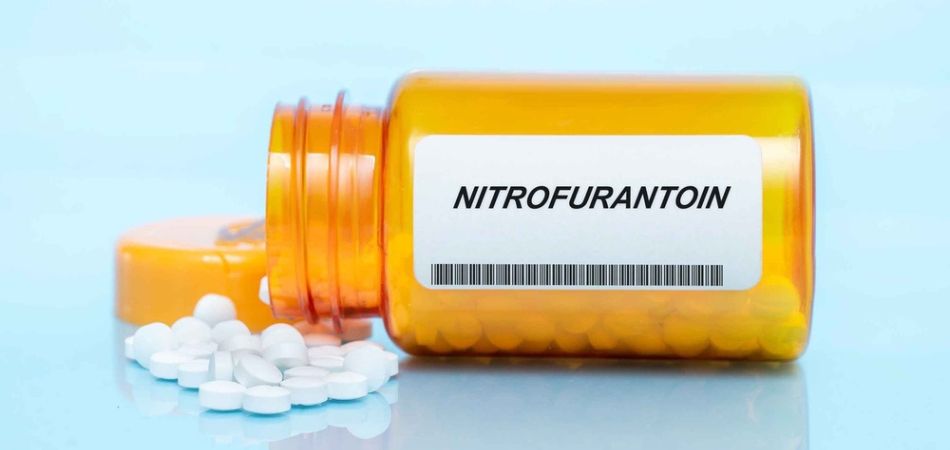
Nitrofurantoin is a popular antibiotic used to treat UTIs, and it has been used since the 1950s. Its job is to kill the bacteria that cause urinary tract infections in both men and women.
Nitrofurantoin is unusual among antibiotics in that most antibiotics travel through the bloodstream to reach an infection. The medication takes a different route in that after you ingest it, the end goal is for it to be excreted in your urine.
Once it’s there, a high concentration of the medicine is sitting in the bladder and urethra, exactly where a lower UTI sits. Targeted delivery is a major factor in why the drug clears these infections so reliably.
Nitrofurantoin is a safe and dependable option when it’s taken as prescribed, but that safety net starts to fade away slightly when alcohol is introduced into the mix.
Why is there conflicting advice about Nitrofurantoin and alcohol?
If you search something along the lines of “can I mix nitrofurantoin and alcohol”, you’ll be met with different types of information, and this is where things can get confusing.
Some websites say it’s fine to drink while prescribed, while others advise against drinking alcohol at all during the course. The reality is, research suggests that nitrofurantoin can be safely used alongside alcohol from a pure interaction standpoint. If you had a glass of wine, there wouldn’t be any interactions, and it wouldn’t stop the antibiotic from working at the chemical level.
But this is exactly where the confusion kicks in, because people read “no interaction” and assume the all-clear to go ahead and drink. But NHS guidance on Nitrofurantoin takes a bit of a different angle. It advises reducing alcohol intake if you get regular UTIs because alcohol can make urine more acidic and irritate the bladder.
So, just because there aren’t any interactions, it doesn’t mean it’s still safe to take.
How alcohol interferes with the way Nitrofurantoin treats your UTI
We’ve already covered how nitrofurantoin works, but it’s important to explore it a little deeper, especially when alcohol is added. The NHS explains that the drug works in a different way from most antibiotics. When you swallow it, most of the dose gets filtered out of your blood and into your urine, which concentrates the medicine exactly where the bacteria are.
Studies show that the excretion of Nitrofurantoin is directly related to kidney filtration, with the drug producing high urinary concentrations while blood and tissue levels remain low.
Nitrofurantoin is essentially a urinary-tract-only antibiotic, and good urine flow is part of how it does its job.
Alcohol disrupts this in two specific ways.
- First, it acts as a diuretic, and research shows that alcohol intake causes the hormone that normally tells your kidneys to hold onto water to do the opposite. The result is fluid loss and dehydration, which is the opposite of what you want during a UTI. NICE guidance on lower UTIs explicitly tells clinicians to advise patients on adequate fluid intake,, and the NHS recommends staying hydrated so you regularly pee throughout the day.
- Second, alcohol can irritate the bladder lining directly. If you’re already dealing with the burning and urgency discomfort of a UTI, drinking can make those symptoms feel worse and harder to manage. You might find yourself thinking the antibiotic isn’t working when really it’s the alcohol amplifying symptoms, the medication is in the middle of clearing.

When a short break from alcohol feels harder than it should
Skipping alcohol for a few days sounds simple on paper, but the reality is, for some people, it isn’t. If the thought of going dry for the length of a Nitrofurantoin course is already unsettling, that reaction is worth taking seriously.
Struggling to abstain even for a brief medical reason can point to a drinking pattern that has quietly become harder to control than you realised.
If that sounds like where you’re at, the steps below are a useful starting point.
Take the difficulty seriously
The first thing to do is be honest with yourself about what the struggle means. If your body and mind protest at the idea of a few days without alcohol, it suggests they’ve adapted to a level of regular intake. Over the days you do manage to stay off it, watch out for:
- Cravings
- Restlessness
- Low mood
- Broken sleep
- Shakes in your hands.
These are early signs of alcohol withdrawal, and the NHS lists them among the physical and psychological symptoms a dependent drinker experiences when they try to cut down. Withdrawal can be more than uncomfortable, and in some cases, it carries genuine medical risk, which is why the next step matters.
Tell the GP who prescribed your Nitrofurantoin
If you’ve been drinking and you’re finding it hard to stop, your GP needs to know. Doctors aren’t there to judge you, but they do need accurate information to treat you safely.
One of the reasons is that suddenly stopping after a long stretch of heavy drinking can trigger withdrawal symptoms that need proper medical supervision rather than going it alone at home.
Also, if you’re still drinking through the course, your GP may decide to monitor you more closely for side effects or, in some situations, consider a different antibiotic. Either way, honesty gives them what they need to look after you properly.
Reach out to Recovery Lighthouse
If reading this has surfaced something you’d rather not look at too closely, that’s usually the sign it’s worth a proper conversation. A lot of people we speak to didn’t realise their drinking had crept into territory they wanted to step back from until a course of medication forced the question.
You don’t need a plan ready, and you don’t need to commit to anything by picking up the phone. A confidential call is sometimes the thing that gets people unstuck.
What are the next steps?
For anyone whose attempts to cut back on alcohol have come with symptoms like shakes or strong cravings that get harder to ignore, the picture is different. Stopping after a long stretch of regular drinking isn’t something to take on alone.
Recovery Lighthouse offers detox to bring you through alcohol withdrawal safely, followed by therapy-led alcohol rehab that gets to what’s been driving your alcoholism in the first place. Not only that, but if your addiction is a prescription drug addiction, we also offer detox for prescription drugs, as well as rehab programmes tailored for prescription drug dependency. If that sounds like what you need, get in touch with Recovery Lighthouse today, and we’ll talk you through what’s involved.
(Click here to see works cited)
- Khamari, B., & Eswarappa Pradeep, B. (2024). Unlocking Nitrofurantoin: Understanding Molecular Mechanisms of Action and Resistance in Enterobacterales. Medical Principles and Practice : International Journal of the Kuwait University, Health Science Centre, 1–24. https://doi.org/10.1159/000542330
- Mergenhagen, K. A., Wattengel, B. A., Skelly, M. K., Clark, C. M., & Russo, T. A. (2020). Fact versus Fiction: a Review of the Evidence behind Alcohol and Antibiotic Interactions. Antimicrobial Agents and Chemotherapy, 64(3). https://doi.org/10.1128/aac.02167-19
- NHS. (2022, January 12). Common questions about nitrofurantoin. Nhs.uk. https://www.nhs.uk/medicines/nitrofurantoin/common-questions-about-nitrofurantoin/
- Munoz-Davila, M. (2014). Role of Old Antibiotics in the Era of Antibiotic Resistance. Highlighted Nitrofurantoin for the Treatment of Lower Urinary Tract Infections. Antibiotics, 3(1), 39–48. https://doi.org/10.3390/antibiotics3010039
- Taivainen, H., Laitinen, K., Tähtelä, R., Kilanmaa, K., & Välimäki, M. J. (1995). Role of plasma vasopressin in changes of water balance accompanying acute alcohol intoxication. Alcoholism, Clinical and Experimental Research, 19(3), 759–762. https://doi.org/10.1111/j.1530-0277.1995.tb01579.x
- National Institute for Health and Care Excellence. (2018, October 31). Overview | Urinary Tract Infection (lower): Antimicrobial Prescribing | Guidance | NICE. Nice.org.uk; NICE. https://www.nice.org.uk/guidance/ng109
- NHS. (2026, April). Alcohol-use disorder. Nhs.uk. https://www.nhs.uk/conditions/alcohol-use-disorder/