




Cannabis Addiction | Signs, Symptoms and Effects
Despite its natural origin, cannabis in the UK is a Class B drug, meaning possession or supply can result in criminal charges.
Medicinal cannabis can be prescribed by specialist doctors for specific conditions, but this accounts for only a small number of users. Most cannabis circulating in the UK is obtained illegally and varies greatly in potency. This unpredictability increases the risk of cannabis addiction and associated mental health issues over time.
What is cannabis?
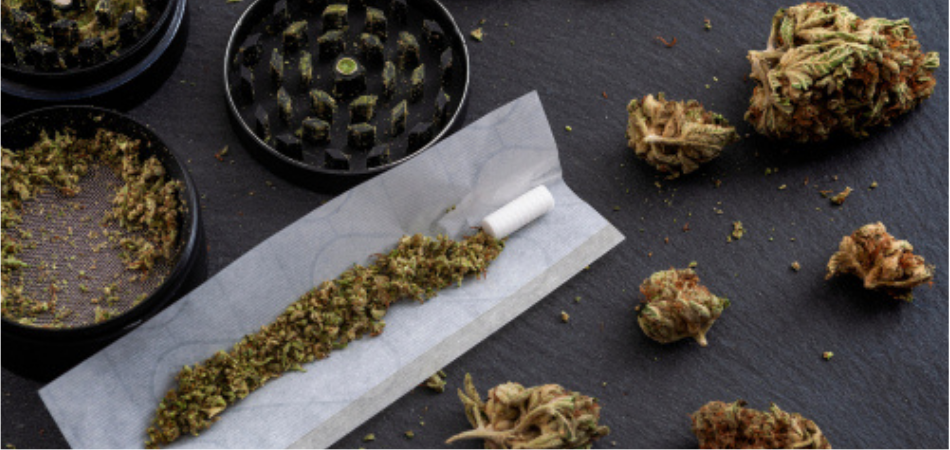
Cannabis comes from the Cannabis sativa plant and is available in several forms, including dried flowers, resin (hash), oils and high-potency concentrates. The main psychoactive compound, THC, creates the “high” that users seek, while CBD is another component often promoted for its potential calming or therapeutic effects.
Is cannabis addictive?
Cannabis is often dismissed as harmless or “non-addictive,” but regular use can create both physical and psychological dependence. THC affects the brain’s reward system, stimulating dopamine release and reinforcing the urge to use again. Over time, tolerance builds, meaning more is needed to achieve the same effect and when use stops, cannabis withdrawal symptoms begin.
These symptoms can include irritability, insomnia, anxiety, low mood and cravings. While not as physically intense as withdrawal from opioids or alcohol, they’re powerful enough to pull people back into use. The cycle can be difficult to break, especially when cannabis becomes tied to stress relief, getting that much-needed night’s sleep or perceived creativity.
It’s these ties that can actually fuel the psychological side of cannabis addiction. The drug may start as a way to unwind or cope but over time, daily use can dull motivation and make life without cannabis feel flat or incomplete. That shift is what often keeps people using long after the fun has gone.
Cannabis use in the UK
Cannabis remains the most widely used illegal drug in Britain. In the year ending March 2024, about 6.8% of adults in England and Wales reported using cannabis, equating to around 2.3 million people. Among young people aged 11-15, 6% said they had used cannabis in the past year, showing that early exposure remains common.
Treatment figures also tell a revealing story. In 2023–24, 21.4% of adults entering drug and alcohol services in England listed cannabis as one of their problem substances. This shows that while the conversation around legalisation has softened attitudes, the harms are still sending thousands into treatment.
The drug’s increasing potency is another concern, with high-THC strains, often produced through selective breeding, have been linked with greater risks of psychosis, anxiety and long-term cognitive issues. The popularity of vaping and edibles also adds another layer of uncertainty because doses are harder to control, leading some to underestimate how much THC they’re consuming.
These figures make one thing clear: cannabis isn’t a harmless pastime and it is possible to form a cannabis addiction. The next section looks at how to spot the warning signs when use begins to slide into dependence.
Struggling with cannabis addiction?
Help is one call away.
What are the signs of cannabis addiction?
It’s hard to spot any signs of addiction initially, and cannabis addiction is no different. Of course, you probably won’t see the links with crime to acquire money for the next ‘hit’, like some drug addictions have the capability of doing to someone, but there are signs.
If you’re worried about your loved one’s cannabis usage or perhaps your own relationship with cannabis is blurry, it may help to take a closer look at the potential signs of cannabis addiction.
- Bloodshot or glassy eyes that persist throughout the day
- Dry mouth, coughing or frequent respiratory irritation
- Ongoing fatigue, sluggishness or lack of motivation
- Noticeable changes in appetite or weight
- Poor sleep or vivid, unsettling dreams when cutting down
- Irritability, restlessness or anxiety when not using
- Difficulty focusing, remembering things or staying organised
- Low mood or emotional flatness without cannabis
- Cravings that make it hard to go without
- Using cannabis as an escape from problems or emotions
- Relying on cannabis to relax or cope with stress
- Missing work, studies or responsibilities because of use
- Spending excessive money on cannabis
- Avoiding social events where using isn’t possible
- Downplaying the amount or frequency of use
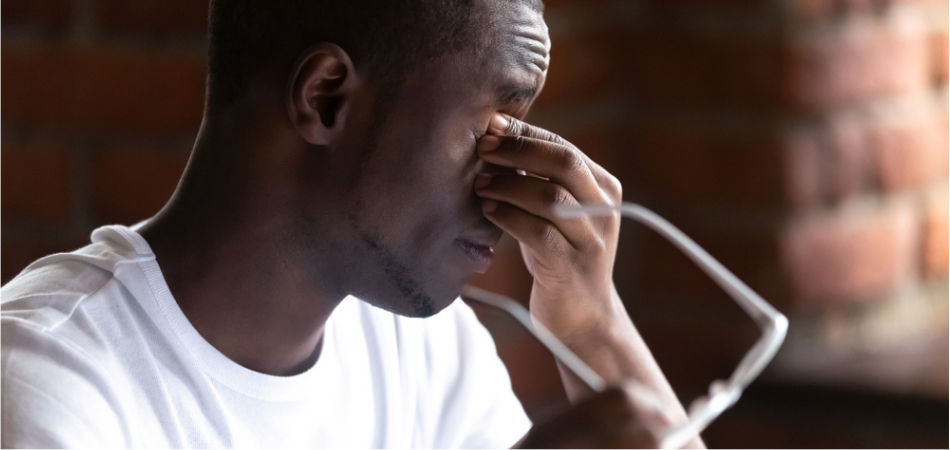
If you notice even a few of these patterns in yourself or someone close, it may be worth pausing to reassess your relationship with cannabis. The next section offers some questions to help you do that honestly.
Am I addicted to cannabis?
It’s never easy to hold your hands up and admit you may have an issue with anything, let alone cannabis. This can happen for many reasons, especially if the drug seems to help you through difficult times or manage mental health struggles. Still, there’s always a line, no matter how much newer perspectives might suggest otherwise.
Take a moment, pause and answer honestly to the following questions:
- Do you use cannabis more often or in larger amounts than you planned?
- Have you tried to cut down and found it harder than expected?
- Do you feel anxious, restless or low when you go without it?
- Has cannabis started to affect your work, studies or relationships?
- Do you find yourself thinking about cannabis throughout the day?
- Have you stopped doing activities you once enjoyed because you’d rather use?
Answering “yes” to one or more of these questions doesn’t automatically diagnose you with a cannabis addiction but it does suggest that cannabis is playing too big a role in your life. The next step is making sure that you know how and where to get the help you may need.
Not sure if you are suffering from cannabis dependency?
In less than five minutes, our confidential self-assessment can help you better understand your relationship with cannabis and whether further support may be needed.
Where can I get help for cannabis addiction?
If cannabis is starting to take control of your life, know that help is available. At Recovery Lighthouse, we provide a supportive environment where recovery from cannabis addiction can begin safely and confidently. Our treatment from drug addictions focuses on both the physical and emotional sides of dependence, helping you understand the patterns behind your use and build new ways of coping.
Our approach to treatment combines detoxing from the drug with impactful therapy sessions. Cannabis detox allows your body to adjust without the substance, while therapy sessions such as CBT and DBT explore how thoughts and behaviours feed the cycle of use. Once your primary treatment and optional secondary treatment (should you choose to extend your stay in rehab) ends, aftercare offers continued support so that progress continues long after you leave.
You don’t have to wait until you’re far down the rabbit hole to ask for help. Reach out to Recovery Lighthouse today to learn how our cannabis addiction programme can guide you toward lasting recovery and a clearer, more balanced life.
Struggling with cannabis addiction? We're here to help.
Our team will guide you through every treatment option for your cannabis dependency with honesty and care, supporting you at your own pace with no pressure or obligation at any stage.
📞
Call UsFree & confidential
✉
Email UsWe reply within hours
📋
AssessmentTakes 5 minutes
🔒 All enquiries strictly confidential
Frequently asked questions
(Click here to see works cited)
- Black, Dame Carol. Dame Carol Black Review of Drugs -Evidence Relating to Drug Use, Supply and Effects, Including Current Trends and Future Risks. Feb. 2020, assets.publishing.service.gov.uk/media/5eafffedd3bf7f65363e4fda/Review_of_Drugs_Evidence_Pack.pdf
- Burggren, Alison C., et al. “Cannabis Effects on Brain Structure, Function and Cognition: Considerations for Medical Uses of Cannabis and Its Derivatives.” The American Journal of Drug and Alcohol Abuse, vol. 45, no. 6, July 2019, pp. 1–17, https://doi.org/10.1080/00952990.2019.1634086
- Connor, Jason P., et al. “Clinical Management of Cannabis Withdrawal.” Addiction, vol. 117, no. 7, Nov. 2021, pp. 2075–95, https://doi.org/10.1111/add.15743
- for, Centre. “Drug Misuse in England and Wales.” Ons.gov.uk, Office for National Statistics, 12 Dec. 2024, www.ons.gov.uk/peoplepopulationandcommunity/crimeandjustice/articles/drugmisuseinenglandandwales/yearendingmarch2024
- “Smoking, Drinking and Drug Use among Young People in England, 2023.” NHS Digital, 17 Oct. 2024, digital.nhs.uk/data-and-information/publications/statistical/smoking-drinking-and-drug-use-among-young-people-in-england/2023/part-8-drug-use-prevalence-and-consumption
- Office for Health Improvement & Disparities. “Adult Substance Misuse Treatment Statistics 2023 to 2024: Report.” GOV.UK, 28 Nov. 2024, www.gov.uk/government/statistics/substance-misuse-treatment-for-adults-statistics-2023-to-2024/adult-substance-misuse-treatment-statistics-2023-to-2024-report
- The University of Bath. “Children of the 90s Study: High-THC Cannabis Varieties Twice as Likely to Cause Psychotic Episodes.” Bath.ac.uk, 2024, www.bath.ac.uk/announcements/children-of-the-90s-study-high-thc-cannabis-varieties-twice-as-likely-to-cause-psychotic-episodes/

There are often calls for cannabis to be made legal here in the UK. In the US, many states have made the d… More
Many people are of the opinion that cannabis should be legalised because it is a naturally occurring subst… More

When it comes to overcoming addiction, those affected often find that they cannot face the idea of living … More

Drug addiction commonly refers to illegal drugs such as cannabis or heroin. However, a growing number of p… More