





Meth Addiction | Signs, Symptoms and Effects
In the UK, methamphetamine is a Class A drug under the Misuse of Drugs Act, and possession can result in up to seven years in prison, while supplying it can carry a life sentence.
What is meth?
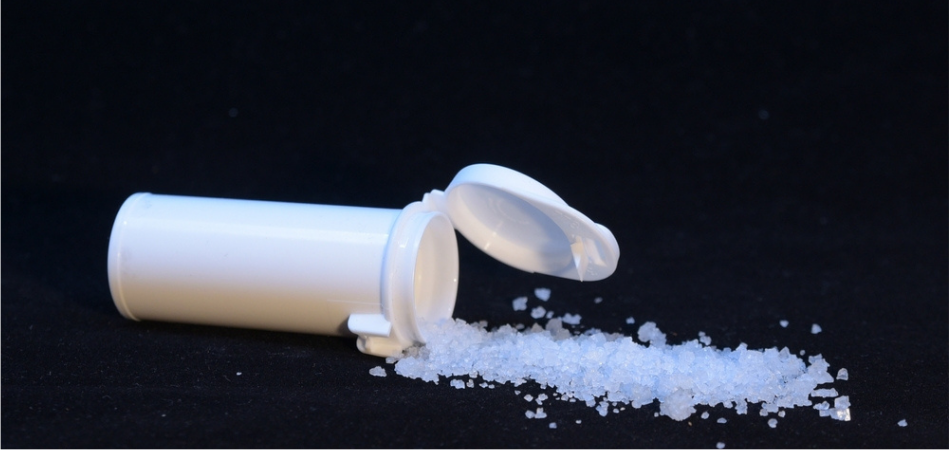
Methamphetamine belongs to the amphetamine family but is a far stronger and more damaging form of the drug. In its illegal form, meth usually appears as clear or white crystals known as crystal meth. It can be smoked, injected or snorted, each method delivering a powerful surge of energy and confidence that users describe as euphoric.
Struggling with meth addiction?
Help is one call away.
Is meth addictive?
Meth is one of the most addictive stimulants known. Its ability to create extreme pleasure while rewiring how the brain experiences reward makes dependency almost inevitable for frequent users.
Under normal circumstances, dopamine is released when we do something meaningful, like eating or achieving a goal, but meth overwrites this process. It does this by releasing huge amounts of dopamine all at once while preventing it from being reabsorbed. The brain then “learns” that meth use equals overwhelming pleasure, far greater than anything found in daily life.
When the high fades, exhaustion and depression take its place, and to escape that crash, users take more, reinforcing the pattern again and again. Over time, tolerance builds, meaning larger doses are needed to reach the same rush. Without meth, motivation and even emotional stability begin to disappear.
The result is a relentless cycle of euphoria followed by despair, and for many, this shift happens faster than expected, with life soon revolving around the next high.
Meth use in the UK
While methamphetamine use in the UK remains less common than other stimulants, the pattern is changing. Reports show that meth has gained ground in specific settings, especially in chemsex environments, where its stimulant and confidence-boosting effects are sought after.
According to the Office for Health Improvement and Disparities, 615 adults in England entered treatment for methamphetamine problems in 2022–23, nearly five times the number seen a decade earlier. This growing trend highlights that meth is no longer confined to isolated pockets of use.
Treatment data also reveals a shift in demographics, with most cases involving men, many of whom report injecting the drug. Injection increases harm dramatically, carrying risks of infection and rapid tolerance. This combination makes recovery more complex and places greater strain on treatment services already managing high demand.
Though meth addiction remains smaller in scale than cocaine or heroin, its rate of increase and severity of harm are major causes for concern. The rising number of people seeking help shows that awareness is spreading but also that dependency is deepening.
Is meth addiction dangerous?
Meth addiction is among the most destructive forms of substance dependence, affecting both mind and body in profound ways. The physical damage is severe but the psychological effects can be just as devastating.
Psychosis and “meth mites”
One of the most disturbing consequences is meth-induced psychosis, a state where reality blurs and paranoia takes over. Many users experience the sensation of insects crawling under their skin, known as meth mites. In response, they scratch intensely, often until wounds become infected or scarred. Studies suggest that this form of psychosis affects a large proportion of long-term users and can persist even after the drug has left the body.
Meth mouth
Another well-known consequence is a slang term known as meth mouth. Meth dries out saliva and increases teeth grinding, while users often consume sugary drinks to stay awake. The result is dental issues like rapid tooth decay and painful infections. Over time, many lose multiple teeth, leading to severe discomfort and social withdrawal.
Physical and mental decline
Beyond visible damage, meth addiction leads to sleep deprivation and mood instability. The body becomes depleted while the mind struggles with mental health issues like anxiety and hallucinations. Even after stopping usage, many continue to face lingering depression or memory problems due to how the drug alters brain regions.
These effects make recovery harder the longer meth use continues, which is why recognising the early signs is so vital.
What are the signs of meth addiction?
As we stated earlier, if someone has been using meth, early intervention is key. The drug is far too addictive to be brushed off with statements like “It’s just on the odd occasion”, like a cigarette or joint. This means that it’s key to know if someone has been using or is already dealing with meth addiction issues.
- Rapid and noticeable weight loss
- Constant fatigue followed by periods of overactivity
- Skin sores or scabs from scratching or picking
- Damaged or missing teeth
- Intense cravings and obsessive thoughts about meth
- Paranoia or hallucinations that feel real
- Irritability, anxiety or agitation
- Long-lasting low mood between uses
- Difficulty focusing or remembering details
- Neglecting responsibilities at work or home
- Becoming secretive or lying about use
- Spending large sums on meth or related items
- Isolating from friends who don’t use
- Stealing or borrowing money to fund use
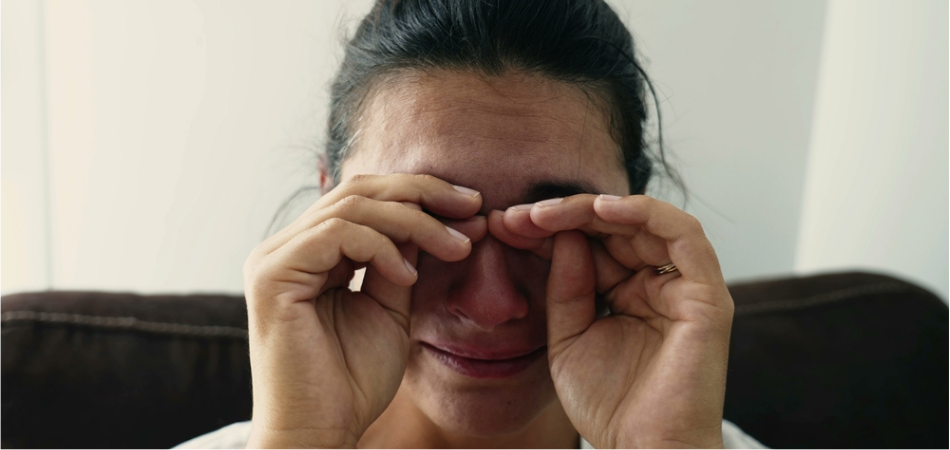
When these patterns begin to appear together, it’s a sign that meth is exerting strong control.
Not sure if you are suffering from meth dependency?
In less than five minutes, our confidential self-assessment can help you better understand your relationship with meth and whether further support may be needed.
Am I addicted to meth?
It can be hard to accept that meth use has crossed the line into addiction, especially as the drug’s intense highs make it easy to give yourself a reason to continue.
These questions may help bring clarity:
- Do you crave meth even when you try not to think about it?
- Have you missed work, studies or family time because of use?
- Are you spending money on meth that was meant for essentials?
- Has your health or appearance changed noticeably since using?
- Do you spend large portions of your day seeking, using or recovering from meth?

If one or more of these feels true, it’s time to consider getting help. Meth addiction rarely remains static, it tends to deepen, often faster than expected. Reaching out sooner makes recovery easier and more effective.
Where can I get help for meth addiction?
Meth addiction can leave you feeling isolated, but recovery is absolutely possible with the right support. At Recovery Lighthouse, we offer structured rehab treatment that focuses on both the physical and emotional recovery process.
Meth addiction treatment begins with detox, allowing your body to safely clear meth while managing withdrawal symptoms such as fatigue and cravings. Once detox from the drug is complete, therapy becomes the central focus, with a chance to explore the causes behind meth addiction and the opportunity to build healthier coping skills.
Aftercare continues that support by providing relapse-prevention strategies and ongoing contact once treatment ends.
If meth has become part of your life, it doesn’t need to stay that way, and even a single conversation can begin the process of change. Contact Recovery Lighthouse today and take the first step toward lasting recovery.
Struggling with meth addiction? We're here to help.
Our team will guide you through every treatment option for your meth dependency with honesty and care, supporting you at your own pace with no pressure or obligation at any stage.
📞
Call UsFree & confidential
✉
Email UsWe reply within hours
📋
AssessmentTakes 5 minutes
🔒 All enquiries strictly confidential
Frequently asked questions
(Click here to see works cited)
- Lin, Min, et al. “Methamphetamine Regulation of Firing Activity of Dopamine Neurons.” The Journal of Neuroscience, vol. 36, no. 40, Oct. 2016, pp. 10376–91, https://doi.org/10.1523/JNEUROSCI.1392-16.2016
- GOV.uk. “United Kingdom Drug Situation 2019: Focal Point Annual Report.” GOV.UK, 31 Mar. 2021, www.gov.uk/government/publications/united-kingdom-drug-situation-focal-point-annual-report/united-kingdom-drug-situation-focal-point-annual-report-2019
- Office for Health Improvement & Disparities. “Adult Substance Misuse Treatment Statistics 2022 to 2023: Report.” GOV.UK, 21 Dec. 2023, www.gov.uk/government/statistics/substance-misuse-treatment-for-adults-statistics-2022-to-2023/adult-substance-misuse-treatment-statistics-2022-to-2023-report
- Rusyniak, Daniel E. “Neurologic Manifestations of Chronic Methamphetamine Abuse.” Neurologic Clinics, vol. 29, no. 3, Aug. 2011, pp. 641–55, https://doi.org/10.1016/j.ncl.2011.05.004
- Zhang, Zhixue, et al. “Alteration of Brain Structure with Long-Term Abstinence of Methamphetamine by Voxel-Based Morphometry.” Frontiers in Psychiatry, vol. 9, Dec. 2018, p. 722, https://doi.org/10.3389/fpsyt.2018.00722

What does a runny nose have to do with drug use?
Most of us don’t think twice about a runny nose. Maybe… More


Chemsex (also known as party and play or wired play) refers to the use of drugs during sex. This type of s… More

Drug addiction can have a devastating impact on the lives of those affected, as well as on the lives of th… More