




Written by:

Medically Reviewed by:
Last Updated:
August 18th, 2026
Cocaine Addiction | Signs, Symptoms and Effects
In the UK, cocaine is a Class A addictive drug, which means possession and supply carry the most serious legal penalties.
Understanding how cocaine works helps explain why use can slide from occasional to compulsive. Once that shift begins, it starts to influence every part of someone’s life, in ways that are easy to miss early on.

What is cocaine?
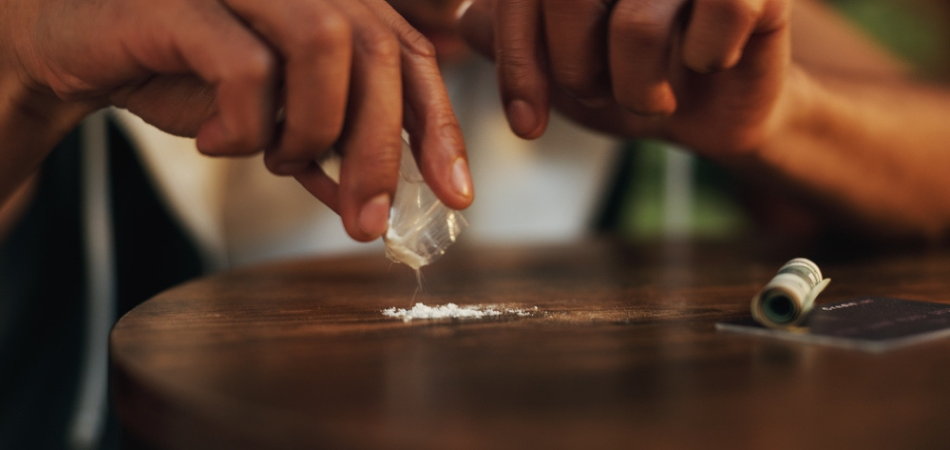
Cocaine comes from the leaves of the coca plant and appears most often as a fine white powder. It is usually snorted, although some people rub it on their gums or dissolve it for injecting.
Different forms of cocaine exist, each carrying its own risk profile but the common thread is a stimulant effect that arrives quickly and encourages repeat use. That fast lift in mood, energy and confidence can feel great at first, yet the aftermath tends to pull harder each time.
Why is cocaine addictive?
Cocaine raises dopamine levels in brain regions involved in reward and motivation. Ordinarily, dopamine is released and then recycled, allowing the system to reset. Cocaine interrupts that recycling, which means dopamine lingers and signals keep firing. The brain then links cocaine with intense reward and begins to prioritise it. With repeated use, tolerance develops, so the same amount feels weaker and larger amounts feel necessary.
Cocaine withdrawal makes this addictive pull even harder with symptoms like:
- Fatigue
- Low mood
- Irritability
- Disturbed sleep
- Strong cravings
While these withdrawal symptoms are not typically life-threatening, they pull people back into the cycle and make stopping unaided very difficult. Seeing these forces at work helps explain why willpower alone often isn’t enough to overcome cocaine addiction.
Struggling with cocaine addiction?
Help is one call away.
Cocaine usage in the UK
If you consider cocaine to be reserved only for the rich and the famous, think again. In England and Wales alone, around 2.1% of adults aged 16–59 report using cocaine in the past year, with higher rates among 16–24s. While the percentages look small on paper, they translate into hundreds of thousands of real people. That scale helps explain why pressure is building elsewhere, from A&E departments to treatment services that are already stretched.
In 2023, England and Wales recorded 1,118 deaths involving cocaine, rising by over 30% in a single year and extending a twelve-year climb. Scotland tells a similar story, with cocaine implicated in nearly half of drug misuse deaths in 2024. What was once brushed off as a casual party drug is now clearly linked with loss that families feel for a lifetime.
Naturally, these kinds of emergencies put strain on the hospital services, too. In England, admissions for cocaine-related mental and behavioural disorders have climbed from just over 5,000 in 2007–08 to well above 14,000 a decade later, a shift that mirrors what frontline staff report anecdotally.
Treatment-wise, almost 30,000 people in England started help for powder cocaine problems in 2023–24, which is the highest number ever recorded in the UK. On one hand, it’s positive, as this shows more people are recognising a problem and reaching out. On the other hand, it underlines how deeply cocaine use has embedded itself across the country.
All of this matters because behind these trends and data lie heartbreaking personal stories of loss and battles with addiction. With that in mind, the next section looks at the signs of cocaine addiction so you know what to watch for and when to act.
What are the signs of cocaine addiction?
Recognising the early symptoms of cocaine addiction is vital, especially if you or someone close has been using it often. By paying attention to changes in mood, behaviour and physical health, intervention becomes possible before dependence strengthens.
- Dilated pupils that linger indoors
- Nosebleeds, runny nose or frequent sinus problems
- Jaw clenching, grinding teeth or mouth sores
- Weight loss through missed meals and poor appetite
- Sleep disruption that leaves you wired, then drained
- Cravings that crowd out other thoughts
- Irritability or agitation during comedowns
- Anxiety that worsens between uses
- Low mood after binges that lasts longer over time
- Elevated confidence tipping into risk-taking or grand plans that never land
- Disappearing during nights out and returning restless or secretive
- Spending more money than planned and hiding receipts or bank statements
- Missed work, late assignments or uneven performance followed by excuses
- Shifting social circles toward people who use
- Promising to cut down, then finding a reason not to

If one or two of these signs feel uncomfortably familiar, it can be worth pressing pause and taking an honest look at your relationship with cocaine before it tightens its grip.
Not sure if you are suffering from cocaine dependency?
In less than five minutes, our confidential self-assessment can help you better understand your relationship with cocaine and whether further support may be needed.
Am I addicted to cocaine?
Clarity often starts with simple questions, perhaps questions you’ve avoided as you didn’t want the spotlight on your own behaviours, or perhaps you never even considered them. Either way, if you’re around cocaine often, it’s worth checking in with yourself whenever possible. Start by answering the following questions as honestly as you can:
- Do you use more than you planned or stay out longer than you intended because cocaine kept the night going?
- Have you tried to cut down or stop, only to find yourself using again within days or weeks?
- Are cravings or thoughts about the next chance to use taking up headspace that once belonged to other priorities?
- Has cocaine use caused strain at work, in studies or in relationships, yet the pattern continues?
- Do you feel anxious, low or unable to sleep after using, then use again to smooth out the crash?
- Are you spending money you cannot afford or changing who you see and where you go, to make using easier?

Answering “yes” does not equal a diagnosis but it is a strong signal to reach out for support and explore your options.
Where can I get help for cocaine?
Cocaine rehab is available and you do not have to figure cocaine addiction out alone. At Recovery Lighthouse, we guide people through a straightforward path that begins with a confidential conversation about their relationship with cocaine.
Together, we look at your goals and any risks, then agree on a plan that fits your situation. For some, that means a focused break from routine in a safe setting to detox from the drug. For others, it starts with structured therapy and practical relapse-prevention tools that can be used immediately. Aftercare keeps momentum going once the first steps are in place, so progress continues when you return home.
If cocaine is starting to call the shots, this is the moment to change direction. Reach out to Recovery Lighthouse today and speak with someone who understands what you are facing and how to move forward.
Struggling with cocaine addiction? We're here to help.
Our team will guide you through every treatment option for your cocaine dependency with honesty and care, supporting you at your own pace with no pressure or obligation at any stage.
📞
Call UsFree & confidential
✉
Email UsWe reply within hours
📋
AssessmentTakes 5 minutes
🔒 All enquiries strictly confidential
Frequently asked questions
(Click here to see works cited)
- Verma, Vivek. “Classic Studies on the Interaction of Cocaine and the Dopamine Transporter.” Clinical Psychopharmacology and Neuroscience, vol. 13, no. 3, Dec. 2015, pp. 227–38, https://doi.org/10.9758/cpn.2015.13.3.227
- Borke, Jesse. “Cocaine Withdrawal: MedlinePlus Medical Encyclopedia.” Medlineplus.gov, 2016, medlineplus.gov/ency/article/000947.htm
- ONS. “Drug Misuse in England and Wales: Year Ending March 2024.” Ons.gov.uk, Office for National Statistics, 12 Dec. 2024, www.ons.gov.uk/peoplepopulationandcommunity/crimeandjustice/articles/drugmisuseinenglandandwales/yearendingmarch2024
- Office for National Statistics. “Deaths Related to Drug Poisoning in England and Wales.” Ons.gov.uk, Office for National Statistics, 23 Oct. 2024, www.ons.gov.uk/peoplepopulationandcommunity/birthsdeathsandmarriages/deaths/bulletins/deathsrelatedtodrugpoisoninginenglandandwales/2023registrations
- “Drug-Related Deaths in Scotland, 2024.” National Records of Scotland (NRS), National Records of Scotland, 2024, www.nrscotland.gov.uk/publications/drug-related-deaths-in-scotland-2024/
- Marsh, Sarah. “Mental Health Hospital Admissions Linked to Cocaine Use Treble in 10 Years.” The Guardian, 20 Nov. 2018, www.theguardian.com/society/2018/nov/20/mental-health-hospital-admissions-linked-to-cocaine-use-treble-in-10-years
- Office for Health Improvement & Disparities. “Adult Substance Misuse Treatment Statistics 2023 to 2024: Report.” GOV.UK, 28 Nov. 2024, www.gov.uk/government/statistics/substance-misuse-treatment-for-adults-statistics-2023-to-2024/adult-substance-misuse-treatment-statistics-2023-to-2024-report

Cocaine abuse can cause enormous harm to almost every organ in your body. Some organs are hit hard and f… More

If you’re reading this, you may have been snorting cocaine and noticed changes in your nose that are w… More

Cocaine can cause serious and potentially even life-threatening risks to your heart. But these risks don… More
According to research, more than half of people addicted to cocaine are also dependent on alcohol, and i… More

What does a runny nose have to do with drug use?
Most of us don’t think twice about a runny nose. Maybe… More

Cocaine addiction among young people is a huge concern in the UK, with recent data showing that 3.8% of … More


Chemsex (also known as party and play or wired play) refers to the use of drugs during sex. This type of s… More