




Addiction | Types, Symptoms and Effects
- Select
- Addiction
- Detox
- Rehab Treatment
Addiction, at its core, is a powerful cycle of seeking comfort that eventually takes control of everything in that person’s life.
What is an addiction?
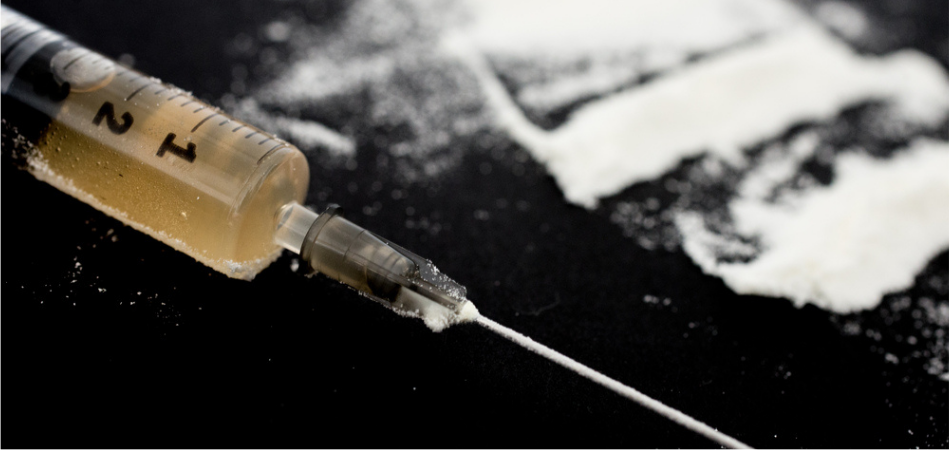
Addiction happens when something that once felt helpful begins to take hold in a way that’s hard to escape. It can begin through relief, distraction or pleasure, but gradually the line between choice and need starts to blur.
As the brain adapts, it learns to crave the same behaviour or substance to feel normal again. Before the person knows it, life slowly starts to centre around that craving, leaving entire lives to fall behind. The person often knows the damage being caused but still feels drawn back to it, no matter how much they want to stop.
Are there different types of addictions?
Addiction awareness in the UK has grown immensely, with many people understanding the basic concept of addiction and even recognising some of its signs. While this is encouraging, it only scratches the surface. Each form of addiction affects people differently and can cause deep damage to both health and everyday stability.
Struggling with addiction? help
is one call away.
What are the signs of addiction?
Let’s imagine three people standing in front of you: a businesswoman, a doctor and a police officer. If you were asked to guess which one is addicted to something, you probably wouldn’t know where to start.
That’s exactly what makes some addictions so hard to spot; not everyone will show the common signs visibly. But if you spend enough time with someone, you’ll eventually notice small cracks begin to form.
Now imagine one of those three people is someone you love; you’d want to recognise the early signs, to make sure they get the help they need. That’s why, below, we explore the general signs of addiction.
(Note: These don’t apply to every addiction but offer a broad overview of what to look out for.)
Psychological signs of addiction
- Mood swings or irritability
- Denial or minimising the problem
- Obsessive thoughts about the substance or behaviour
- Loss of interest in hobbies or passions
- Emotional numbness or detachment
Behavioural signs of addiction
- Secrecy or lying about activities
- Neglecting work, family or personal responsibilities
- Risk-taking or reckless behaviour
- Financial difficulties or unexplained spending
- Social withdrawal or isolation
- Repeated failed attempts to quit
Physical signs of addiction
- Changes in sleep patterns
- Sudden weight loss or gain
- Bloodshot or glassy eyes
- Poor hygiene or personal appearance
- Unexplained health issues or frequent illness
- Withdrawal symptoms when trying to stop
If some of these signs ring true for someone you love or perhaps even yourself, it may be worth taking a closer look at your relationship with the substance or behaviour in question:
Do I have an addiction?
As we’ve shown, it can be difficult to spot an addiction in a person but it can sometimes be just as difficult to spot an addiction in yourself. As strange as it may sound, addictions are sneaky and often only reveal themselves when you’re already caught in their cycle. That’s why, if you’ve been engaging in potentially addictive behaviours or using addictive substances, it’s important to check in with yourself and make sure everything is okay.
Ask yourself the following questions:
- Do I find it hard to go a day without using a particular substance or engaging in a specific behaviour?
- Have I ever lied or hidden my use or behaviour from someone close to me?
- Do I continue even when I know it’s causing problems in my health, work or relationships?
- Have I tried to cut down or stop but found I couldn’t?
- Do I spend a lot of time thinking about when or how I’ll use again?
- Have I stopped doing things I used to enjoy because of my substance use or behaviour?
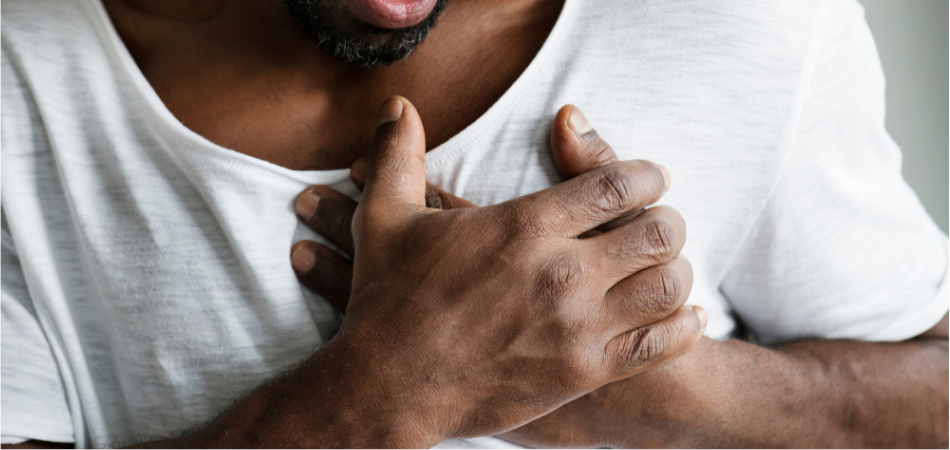
If you’ve answered “yes” to even one of these questions, it could be worth reaching out to addiction specialists for a deeper evaluation and support.
Not sure if you have developed an addiction?
In less than five minutes, our confidential self-assessment can help you better understand whether further support may be needed.
Are addictions treatable?
At Recovery Lighthouse, we treat addiction by caring for both the body and the mind. Our addiction treatment process for substances will include detox first and foremost. This allows for space for the real work to begin: therapy.
For those with behavioural and substance addictions, therapy and holistic support focus on rebuilding the person beneath the addiction, not just the symptoms on the surface.
Alongside our optional secondary treatment care, our aftercare programme remains a vital part of what we offer, ensuring you continue to receive guidance and support long after leaving our care. This ongoing connection helps give sobriety the strength to last.
Addiction can be treated. Yes, it takes effort and patience but with the right help, people rebuild their entire lives within our walls.
What are the next steps?
If you or someone you love feels trapped by addiction, it’s important to remember that recovery is always possible. At Recovery Lighthouse, we offer specialist treatment programmes for both substance-related and behavioural addictions, helping people rebuild their lives with structured, lasting support.
Our team provides a full pathway to recovery that includes detox, personalised therapy, aftercare planning and a strong alumni community to help you stay connected long after treatment ends.
Reach out to us today, recovery can begin with a single conversation.
Struggling with addiction? We're here to help.
Our team will guide you through every treatment option for your addiction with honesty and care, supporting you at your own pace with no pressure or obligation at any stage.
📞
Call UsFree & confidential
✉
Email UsWe reply within hours
📋
AssessmentTakes 5 minutes
🔒 All enquiries strictly confidential
Frequently asked questions

Addiction is like a voice in the head telling you exactly what you need to hear to keep doing what you'r… More
If you’ve ever wondered why cravings hit so hard, why a thought becomes an urge and then feels like … More
If each of us were completely honest with ourselves, there likely isn’t a single person who doesn’t … More

We all like to picture our brains working at their sharpest, strongest and clearest. The thought of that… More

Even after key breakthroughs into its psychological drivers behind addictive behaviours, addiction remai… More

What does a runny nose have to do with drug use?
Most of us don’t think twice about a runny nose. Maybe… More

One of the greatest challenges in staying sober is managing addictive behaviours. The world around us is… More

Drugs and alcohol can be dangerous enough on their own, but when they are mixed, the dangers can be magnif… More

Both infidelity and addiction can shake the trust, intimacy, and commitment in a relationship. When these … More

Addiction recovery is a multi-layered process. Attending addiction rehab is not only about recovery from d… More

Chemsex is a mode of sexual experimentation associated with the use of substances. In 2015, a group of pra… More

Virtual reality involves the use of head-mounted displays to immerse individuals in a virtual world. Early… More

The fear of relapse can be a constant shadow for those in recovery, looming ominously over every achieveme… More

In a 2023 article, it is suggested that the British Netflix show "Sex Education", not gaining significant … More

Throughout history, legends have been passed through generations as stories and many old wives’ tales ge… More

Peaky Blinders star Tom Hardy knows all about battling drugs and alcohol. His teen years and early twentie… More

For many people, the hardest part of the recovery process is accepting that the illness exists in the firs… More

Decision-making is certainly not at its best when the individual is suffering from addiction. Addiction ca… More
Anyone who has suffered from addiction will tell you that holding down a job is not always the easiest of … More

Recovering from a drug or alcohol addiction is a long process; for most, it will entail a comprehensive re… More
Drug addiction is an incredibly destructive illness that can consume the li… More
Addiction can have a devastating effect on individuals, with many risking losing everything they once held… More
Despite what many people might believe, addiction can happen to absolutely anyone. It is an illness, j… More

Addiction is an illness that is notoriously difficult to beat, and some women cannot find the strength to … More

Living with addiction is incredibly tough; admitting you have a problem is even tougher. When you finally … More

Despite the fact that addiction affects millions of people around the world, there is still much stigma at… More

Living with an addict can be a terrible experience. For those who are dealing with a family member's addic… More

Addiction is known as a family illness because of the destruction and chaos it causes for all members of t… More

Addiction is an illness that wreaks havoc on the lives of those affected. However, this is an illness that… More

There are many reasons people turn to drugs and alcohol. Some will do so out of curiosity, with those liki… More